Evaluating Advanced
SB Core Energy is assessing the feasibility of deploying advanced micro-nuclear reactor technology in India for industrial and data-centre applications. This page presents publicly available information about micro-nuclear technology and explains our strategic assessment approach.
The technical specifications and performance characteristics described on this page are drawn from publicly available information published by third-party technology developers. SB Core Energy has not independently validated these specifications. No technology deployment, partnership or regulatory approval has been confirmed.
Why Micro-Nuclear Technology?
Micro-nuclear reactors — also referred to as micro-reactors or small modular reactors at the smaller end of the scale — are compact nuclear fission systems designed to generate electricity and heat at a scale suitable for industrial facilities, remote communities, and data centres. Unlike large conventional nuclear power plants, micro-reactors are designed to be factory-fabricated, transportable, and deployable with a smaller physical footprint. Advanced designs use passive safety systems that are intended to reduce the risk of accidents without requiring active operator intervention. These characteristics make micro-nuclear technology a candidate for addressing India's industrial energy challenge — though deployment in India would require extensive regulatory, technical, commercial, and legal assessment.
The following section describes the Westinghouse eVinci™ micro-reactor as a reference technology being evaluated by SB Core Energy. This description is based on publicly available information from Westinghouse Electric Company. SB Core Energy is not a manufacturer, licensee, or authorised distributor of the eVinci™ reactor.
Westinghouse eVinci™ Micro-Reactor
The eVinci™ micro-reactor is a heat-pipe-cooled, solid-state nuclear reactor design developed by Westinghouse Electric Company. It is one of several advanced micro-reactor designs currently in development globally. The following specifications are drawn from publicly available Westinghouse publications and are provided for reference only.
Proposed partnership under evaluation; no joint venture agreement has been executed. SB Core Energy is evaluating potential technology partnerships to assess the feasibility of advanced micro-nuclear energy deployment in India. Any proposed collaboration remains subject to discussions, definitive agreements, technical feasibility and applicable regulatory approvals.
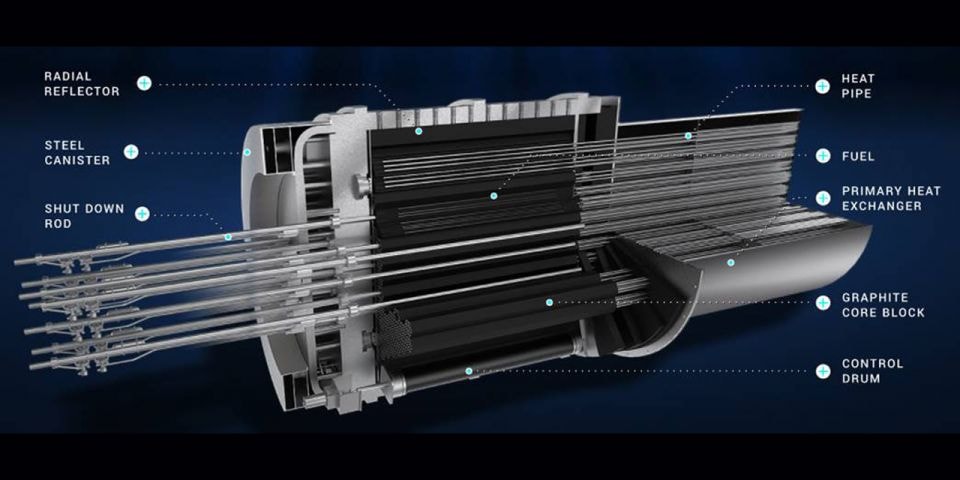
Westinghouse eVinci™ micro-reactor diagram. Source: Westinghouse Electric Company. Reproduced for reference only.
How It Works
The eVinci™ design uses heat pipes — sealed tubes containing a working fluid — to transfer heat from the reactor core to a power conversion system. This passive heat transfer mechanism is intended to operate without active pumping systems. The reactor core uses TRISO-X fuel particles embedded in a graphite matrix. These characteristics are described in publicly available Westinghouse technical publications. SB Core Energy has not independently verified these design claims.
Passive Safety Design
Westinghouse describes the eVinci™ as incorporating passive safety features intended to reduce accident risk without requiring active operator intervention. As with all nuclear technologies, the actual safety performance of any deployed reactor would be subject to independent regulatory assessment and licensing by the relevant national nuclear authority. In India, this would be the Atomic Energy Regulatory Board (AERB).
Physical Footprint
The eVinci™ is designed for a compact, below-grade installation. Westinghouse publishes indicative footprint dimensions in its technical materials. Actual site requirements for any Indian deployment would depend on site-specific engineering assessments, regulatory requirements, and applicable safety exclusion zones.
Operational Life and Refuelling
Westinghouse describes the eVinci™ as designed for extended operation between refuelling intervals. Actual operational life and refuelling requirements for any deployed unit would be subject to regulatory licensing conditions and operational experience.
Waste and Spent Fuel
All nuclear reactors produce radioactive waste, including spent nuclear fuel. The management, storage, and disposal of spent fuel from any Indian deployment would be subject to the requirements of the Atomic Energy Act, 1962, and applicable AERB regulations. SB Core Energy is assessing the waste management implications as part of its feasibility evaluation.
Global Development Status
The eVinci™ is currently in pre-commercial development. Westinghouse is pursuing regulatory licensing in Canada and the United States. No eVinci™ unit has been commercially deployed as of the date of this publication. Deployment in India would require a separate regulatory licensing process under Indian law.
SB Core Energy's Strategic Plan
SB Core Energy is at an early stage of assessing the feasibility of advanced micro-nuclear deployment in India. The following describes our proposed development pathway. These are proposed targets, not confirmed outcomes.
Technology and Partnership Assessment
Ongoing — target completion 2026–2027
Evaluate advanced micro-nuclear technologies for Indian deployment suitability. Engage with potential technology partners, including Westinghouse Electric Company, to assess the feasibility of a technology partnership or joint venture. No partnership agreement has been executed.
Regulatory and Commercial Feasibility
Proposed target: 2027–2029
Engage with the Atomic Energy Regulatory Board (AERB), the Department of Atomic Energy, and other relevant Indian authorities to assess the regulatory pathway for micro-nuclear deployment. Conduct technical due diligence, site assessments, and commercial feasibility studies.
Commercial Deployment
Proposed target: 2030 and beyond
Subject to successful completion of regulatory licensing, technology partnership agreements, financing, and all applicable approvals — pursue initial commercial deployment of micro-nuclear capacity for industrial and data-centre customers in India.
All milestones are proposed targets subject to feasibility assessments, regulatory approvals, definitive agreements, and financing. They are not guaranteed outcomes.
Interested in Our Strategy?
Learn more about our investment thesis or get in touch with our team.